
|
No. 33 Edition, Jun. 2026 |

|
|
||
|
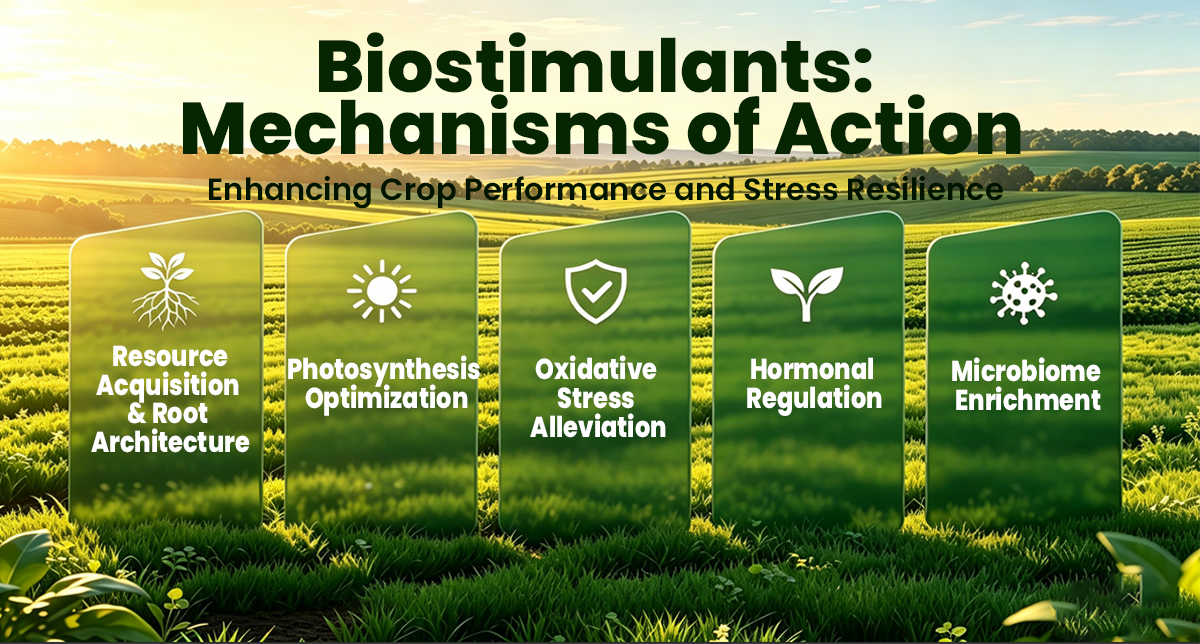
Biostimulants are a diverse group of substances and microorganisms that do not function as traditional nutrients or pesticides. Instead, they enhance plant performance by modulating biochemical, physiological, and molecular processes. They are increasingly valued in sustainable agriculture for improving crop productivity and helping plants cope with abiotic stresses like drought, nutrient limitations, and oxidative damage.
Seaweed extracts (SE) and humic substances (HS) are particularly effective at improving water and nutrient uptake. They influence the expression of aquaporins — water channel proteins — and promote favorable changes in root architecture, such as increased lateral root development and root hair density. This leads to greater soil exploration and enhanced absorption of water and macronutrients.
Microbial biostimulants complement these effects by solubilizing nutrients in the rhizosphere and stimulating plant uptake mechanisms. They are especially valuable in nutrient-poor soils, where they facilitate the acquisition of phosphorus (P), potassium (K), and silicon (Si), contributing to more efficient resource use.
Protein hydrolysates (PH) help maintain photosynthetic efficiency during stressful conditions by supporting the stability of thylakoid membranes in the light-dependent reactions. Humic substances contribute by promoting better structural organization of the photosynthetic apparatus.
Collectively, these biostimulants help sustain Rubisco activity, mesophyll conductance, and carbohydrate production, even when drought limits stomatal CO₂ uptake. This resilience translates into more stable yields under challenging environmental conditions.
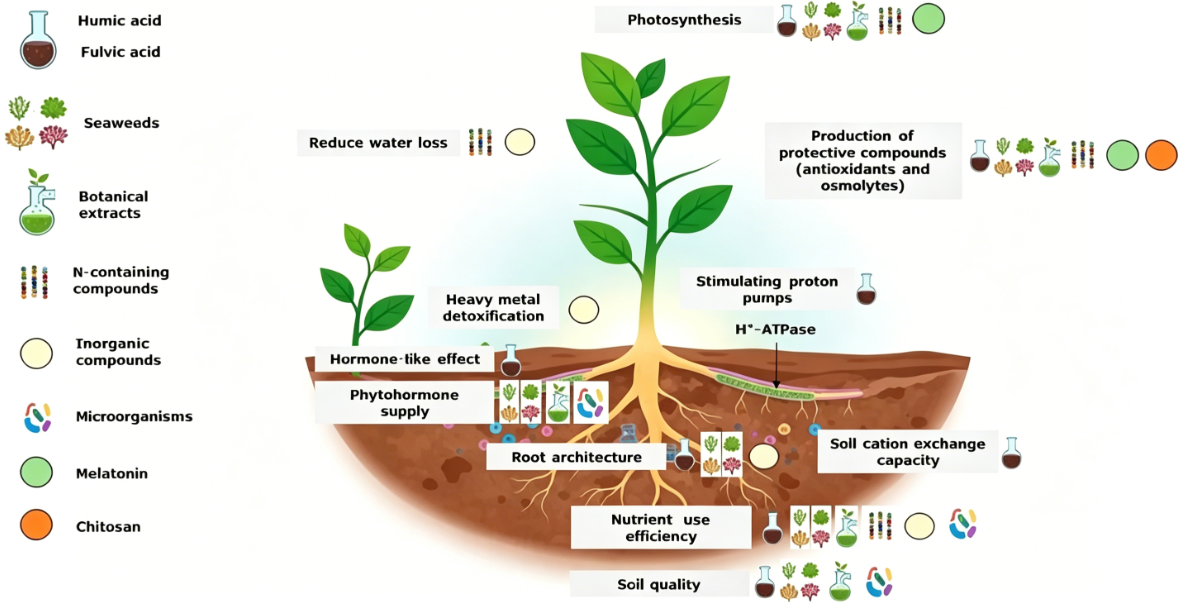
Biostimulants bolster the plant’s natural antioxidant systems. They upregulate key enzymes such as ascorbate peroxidase (APX) and glutathione reductase (GR), while also promoting the accumulation of osmoprotectants like proline. These actions reduce lipid peroxidation, minimize cellular damage, and help prevent programmed cell death, enabling plants to recover more effectively from short-term extreme events.
Many biostimulants exhibit hormone-like activity by mimicking or influencing phytohormones such as auxins, gibberellins (GAs), and cytokinins (CKs). This can reprogram growth patterns in beneficial ways. Protein hydrolysates, for instance, modulate endogenous hormone balances — often reducing stress signals like abscisic acid (ABA) and ethylene — which supports continued root growth and elongation under adverse conditions.
Microbial biostimulants may produce compounds like indole-3-acetic acid (IAA) and volatile organic compounds that further stimulate root development and hair formation.
Biostimulants foster beneficial plant-microbe interactions by enhancing microbiome diversity and correcting imbalances (dysbiosis). This promotes stronger microbial colonization, which in turn supports nitrogen fixation, nutrient cycling, and overall plant vigor.
For example, humic substances can promote nodulation in legumes like soybean by modulating ethylene levels, while seaweed extracts have been linked to the enrichment of beneficial bacteria (such as those in the Burkholderiaceae family) on leaves and in plant tissues.
In an era of climate variability and the push for reduced chemical inputs, biostimulants offer a powerful, complementary tool. By targeting multiple physiological pathways simultaneously, they help build more resilient cropping systems that deliver consistent performance with lower environmental impact.
|
|
|