
|
No. 32 Edition, Nov. 2025 |

|
|
||
|
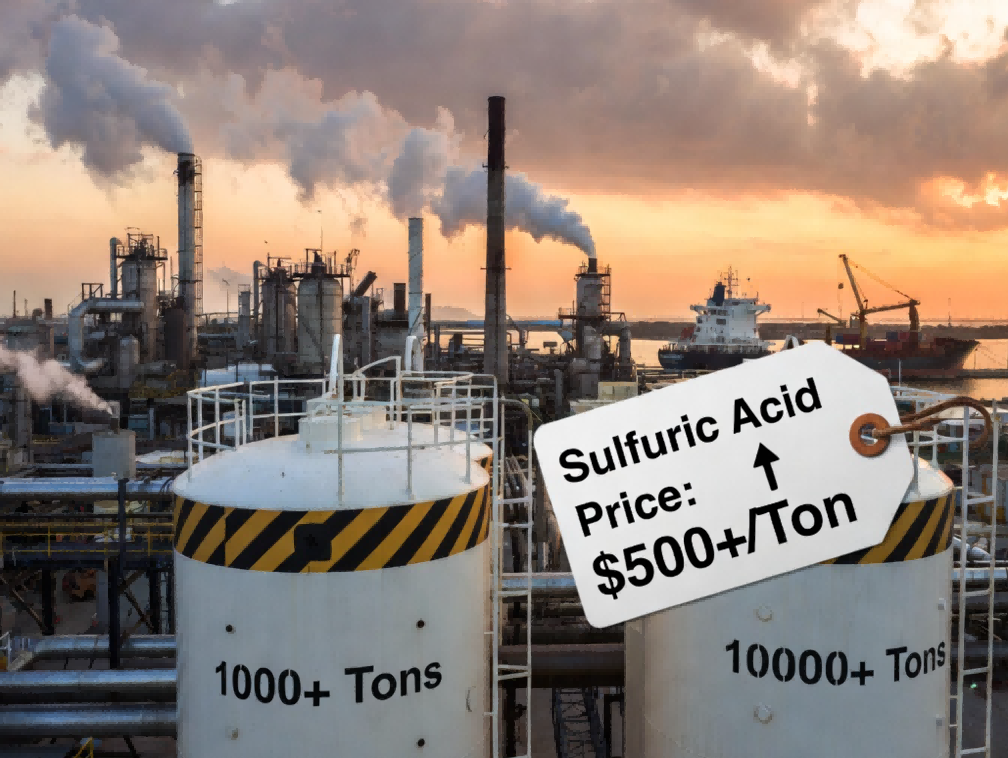
Driven by the near-total halt in sulfur exports and shipments from the Middle East through the Strait of Hormuz, along with sulfuric acid export restrictions imposed by several countries, the spot price of sulfuric acid—a critical raw material for phosphate fertilizer production—has climbed above $500 per metric ton in recent weeks.
This surge is compressing profit margins for phosphate fertilizer manufacturers, prompting some to curtail production. At the same time, it is accelerating efforts to localize phosphate fertilizer capacity outside the Gulf region and may trigger a lasting structural shift in global supply chains.
According to Traubenbach Associates, phosphate fertilizer producers accounted for 54% of global sulfuric acid demand in 2024. Roughly half of the world’s seaborne sulfur supply—the primary feedstock for sulfuric acid—originates from the Middle East. Disruptions in the Strait of Hormuz have effectively paralyzed this key route, with only limited operations continuing through specialized transit arrangements with Iran.
The combination of skyrocketing sulfuric acid and sulfur costs, coupled with ongoing disruptions in synthetic ammonia supply, has placed severe pressure on global phosphate producers. In its Q1 2026 earnings report, U.S.-based Mosaic noted that higher phosphate fertilizer sales volumes were entirely offset by elevated sulfur costs, resulting in results that fell short of analyst expectations. The company has subsequently reduced phosphate production in both Brazil and the United States. Similarly, Morocco’s Office Chérifien des Phosphates (OCP), the world’s largest phosphate exporter, has lowered output following scheduled maintenance.
With sulfuric acid supplies remaining tight and phosphate fertilizer prices rising, countries outside the Gulf are fast-tracking domestic production projects. Initiatives in Morocco, Canada, the United States, and other regions are gaining momentum. Analysts expect this trend to reduce long-term reliance on Gulf-centered supply chains, marking a structural transformation in the global phosphate fertilizer trade.
Sourcing from AgriGoods Herald on May 30
|
|
|